


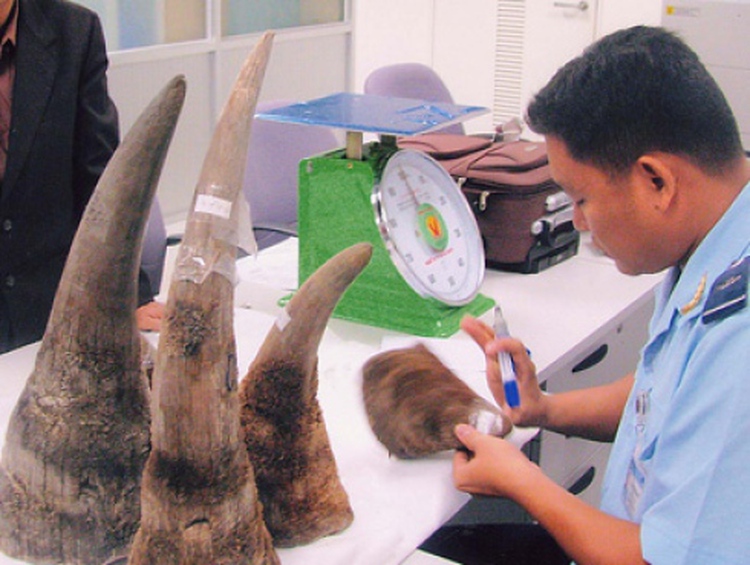
The Vietnam's branch of Geneva-based international organization - Convention on International Trade in Endangered Species of Wild Flora and Fauna (CITES) - held a meeting on October 11 to clarify the use of rhino horns in Vietnam.
The meeting was held to clarify the results of an investigation executed by Trade Records Analysis of Flora and Fauna in Commerce (TRAFFIC) and the World Wide Fund For Nature (WWF).
Traditionally, rhino horn is ground into powder, mixed with wine, and drunk by older men, who believe it will improve their virility. A recent survey of more than 700 people in Ho Chi Minh City and Hanoi revealed that 5 percent have used rhino horn for this purpose, and 16 percent wish to.
However, some foreign websites have distorted these numbers, claiming that 5 percent of Vietnam’s population, or 4 million Vietnamese, are using rhino horns. This gives Vietnam a terrible reputation, asserted Do Quang Tung, director of CITES.
In recent news, a Vietnamese 29-year-old man, Le Manh Cuong, was caught red-handed when attempting to smuggle five pieces of rhino horn weighing 20.1 kilograms in total out of Kenya on September.
Since the beginning of the year, Vietnamese police have intercepted 4 cases of rhino horns being illegally transported from foreign countries to Vietnam with a total weight of more than 20 kg, Tung said.
